How It All Began
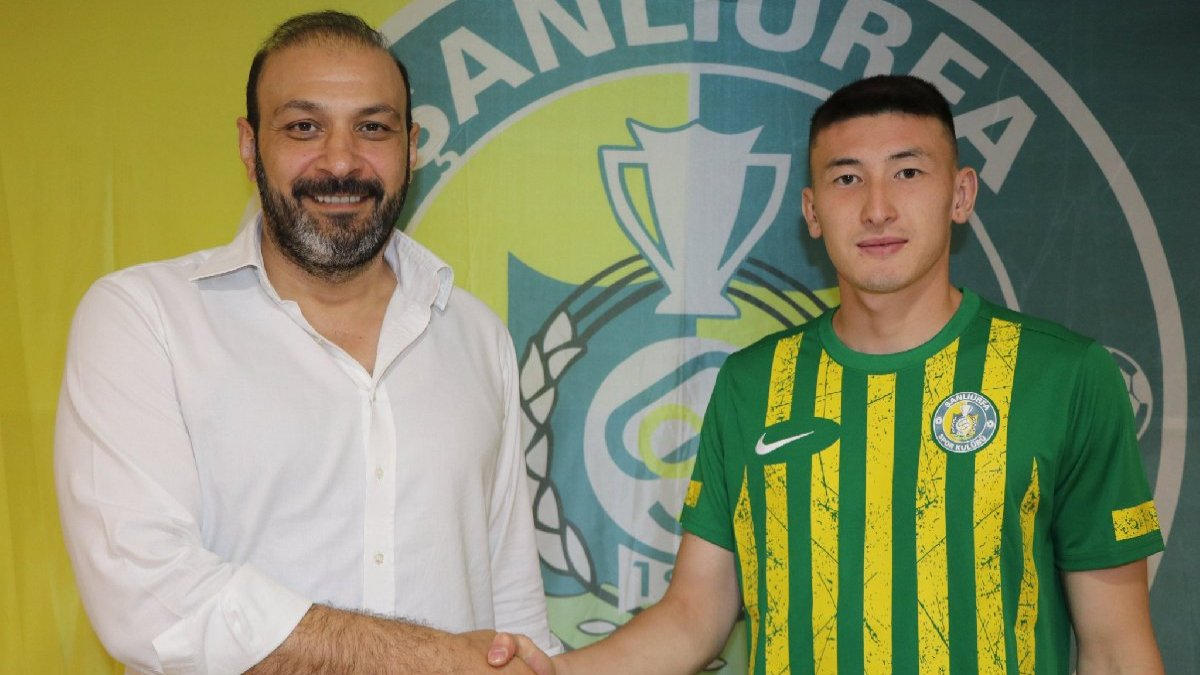
In July 2023, Erzhan Tokotaev signed a contract with Turkish club Sanliurfaspor — for two seasons, until the end of the 2024/25 season. The contract set out a clear schedule of monthly payments.
Erzhan fulfilled his obligations in full: he trained, played, and remained at the club's disposal. The club did not. Salary arrears accumulated month after month.
Throughout this time, Tokotaev deliberately kept the situation from escalating into open conflict. While the contract was running, what mattered most to him was playing time — the opportunity to be on the pitch, develop, and prove his level. He had no desire to damage his relationship with the club or create tension. The debt remained a debt, but it was waiting for its moment.
When only a few months remained before the contract expired, it became clear: waiting was no longer an option.
Three Notices. Zero Replies.
In May–June 2025, Tokotaev sent the club three formal default notices — with specific amounts owed and reasonable deadlines for payment. The final notice was addressed to the club's new president.
The club did not respond once.
On 6 September 2025, a claim was filed on behalf of Erzhan Tokotaev with the FIFA Dispute Resolution Chamber (DRC). The player's interests were represented by APFKR President Rustam Dzhanybaev.
The Club Hired Lawyers and Attempted to Avoid Accountability
Sanliurfaspor approached the case seriously: the club retained a law firm and raised a procedural objection — in its view, the dispute should have been heard by the Turkish Football Federation's National Dispute Resolution Chamber (TFF DRC), not FIFA.
The club's reasoning: the contract expressly named the Turkish chamber as the competent body. Therefore, FIFA had no right to intervene.
This is a standard tactic. And it did not work.
APFKR defended its position: the TFF DRC does not meet FIFA's requirements for national dispute resolution chambers and is not officially recognised by FIFA. Under the FIFA Regulations on the Status and Transfer of Players, parties may refer a dispute to a national body only if that body is recognised by FIFA. The Turkish chamber is not on that list — and therefore the contractual reference to it does not strip FIFA of jurisdiction.
The DRC's sole judge agreed with this argument in full. FIFA's jurisdiction was confirmed.
Decision: In Favour of the Player
On 19 March 2026, the FIFA Football Tribunal ruled in favour of Erzhan Tokotaev.
The club was ordered to pay the player all outstanding salary plus 5% interest per annum from the date the claim was filed until the date of actual payment.
In addition, Sanliurfaspor was fined USD 12,500 payable to FIFA — for systematic violations: this was already the club's sixth such offence within two years. FIFA explicitly stated that repeated violations are treated as an aggravating circumstance.
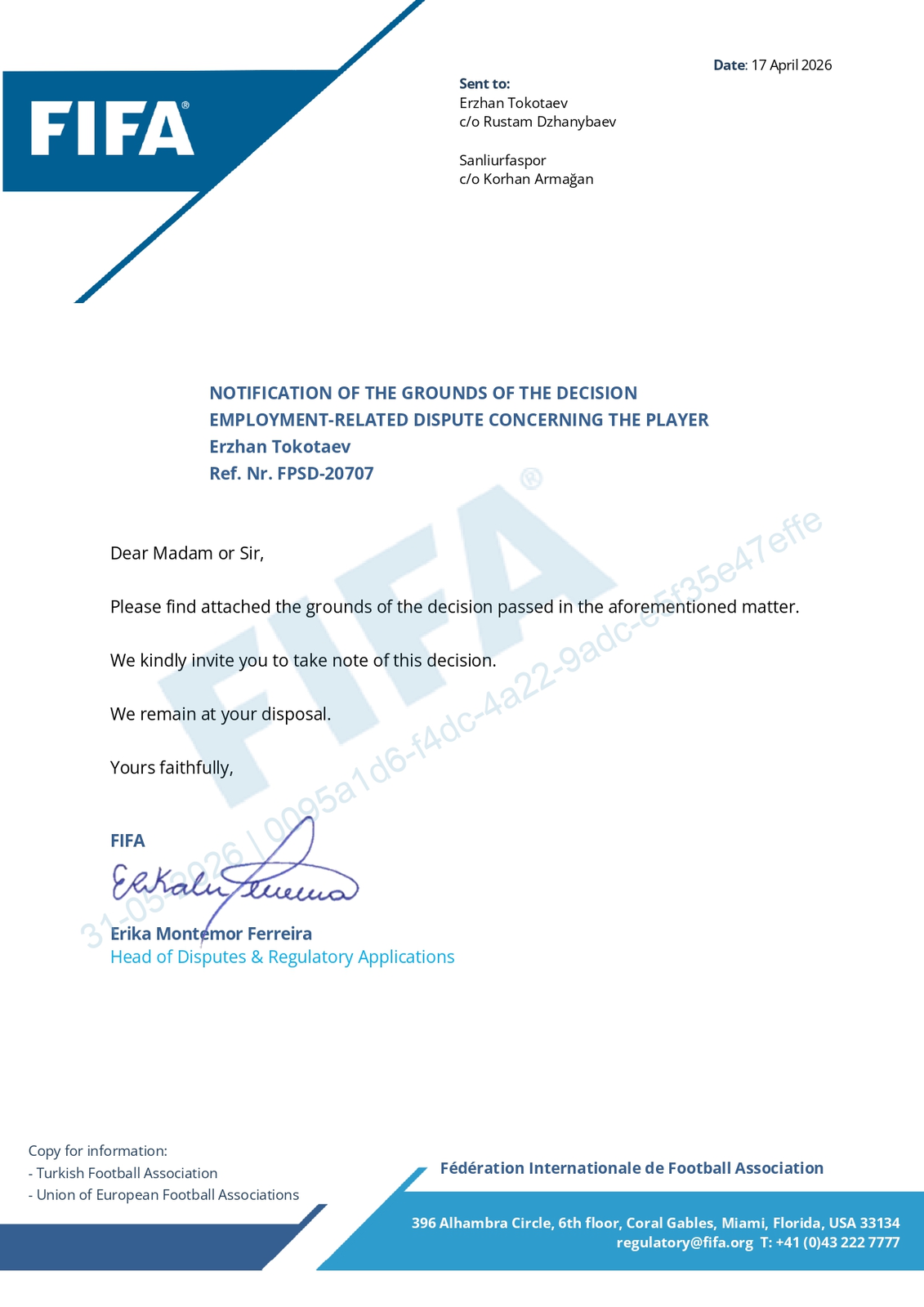
The club was given 45 days to comply with the decision. The deadline to appeal to the Court of Arbitration for Sport (CAS) was 21 days from receipt of the reasoned decision — the clock started on 17 April 2026. No appeal was filed.
Perhaps the club weighed the risks and made a deliberate decision not to appeal: filing with CAS is a costly procedure, and with the evidence on file, the chances of a different outcome were virtually nil. Another explanation is equally plausible — the tactic common in such cases: don't pay, don't appeal, just wait. Either way, the outcome is the same: the decision entered into force and payment will have to be made regardless.
The Club Did Not Pay. FIFA Imposed Sanctions.
APFKR filed a request for enforcement. On 8 June 2026, FIFA officially notified the club of a ban on registering new players — both internationally and domestically. The ban remains in effect until the full amount is paid and may last up to three entire and consecutive registration periods. The Turkish Football Association was instructed to immediately implement the ban at the domestic level.
For a club in Turkey's second division (TFF 2. Lig), this is a serious blow: without the right to register players, preparing for a season properly is impossible.
What This Means for Kyrgyz Footballers
Erzhan Tokotaev did everything right. He did not cause scenes, did not damage his relationship with the club mid-season. He waited patiently, documented the violations, and followed the proper procedure at every step: notices, deadlines, claim, evidence. It was precisely this composure and legal precision that delivered the result.
"This case is an important precedent for Kyrgyz football as a whole. Erzhan proved that if you do things the right way, the system works. We want clubs anywhere in the world to understand — our players cannot be cheated without consequences. Every one of them has a union behind them. And we know how to protect their rights."
— Rustam Dzhanybaev, President of APFKR