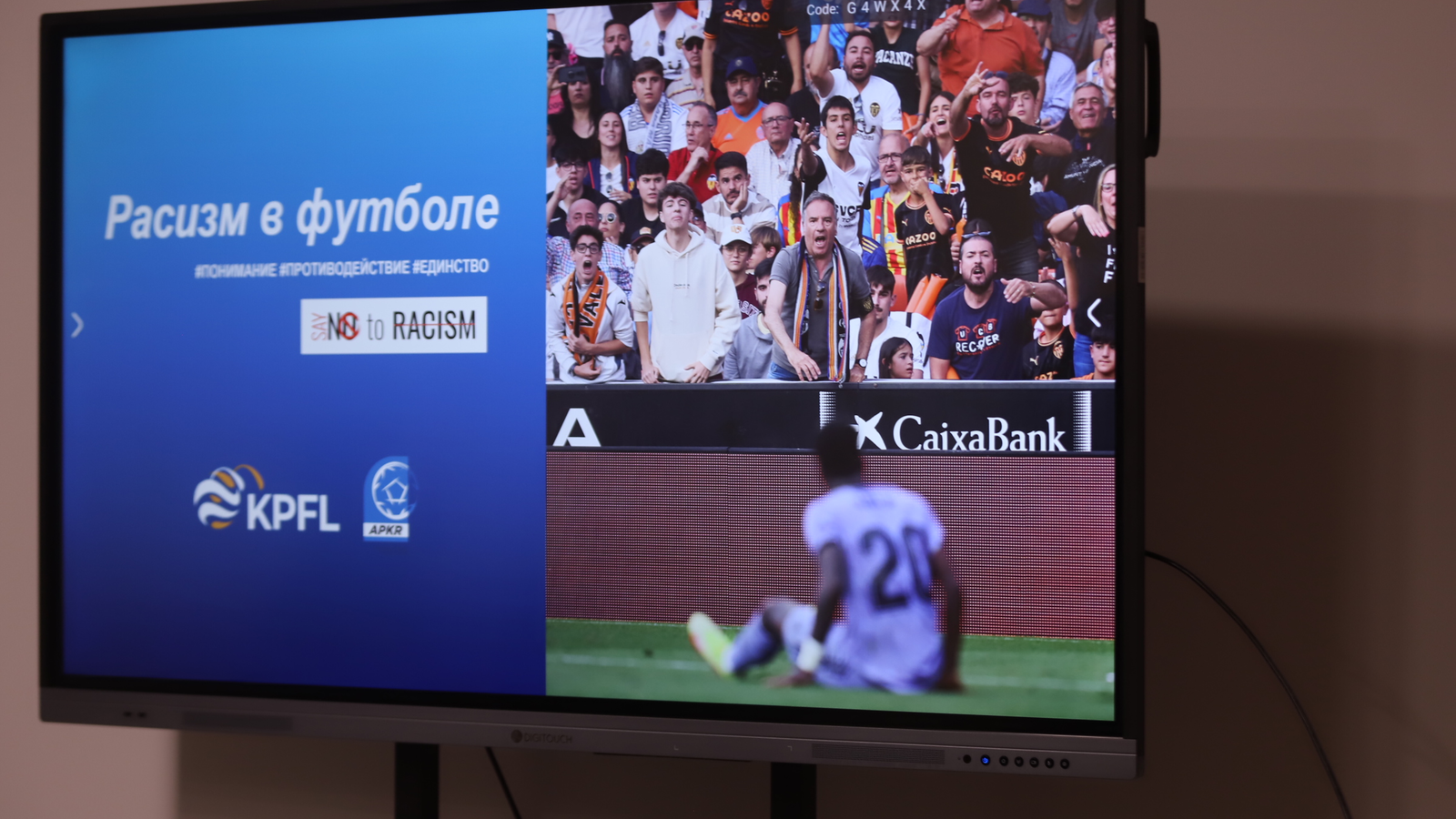
Discrimination is not a reflection of society. It is a workplace problem
When a racism, xenophobia, or other discrimination incident occurs in football, the familiar response tends to follow: "This reflects what is happening in broader society. Football cannot solve the problem alone."
FIFPRO challenges that argument directly. If the same incident happened in any other professional workplace — an office, a factory, a hospital — it would immediately be classified as a violation of workers' rights and would demand an immediate institutional response. In football, however, players are too often expected to cope with it, process it publicly, and campaign for change themselves.
Erica Puppo, FIFPRO's Head of Equity, Diversity & Inclusion (EDI), is direct:
"We need to stop shifting the burden onto those who have been harmed. Institutions — clubs, leagues, governing bodies — must be the primary actors in combatting discrimination, not background supporters."

Photo: © FIFPRO
A systemic problem requires a systemic response
According to FIFPRO, discrimination in football operates on a systemic level — not as a collection of isolated incidents, but as a persistent pattern embedded in the structure of the industry.
The key shift required is from reactive to preventative. Today, most existing mechanisms — match protocols, reporting systems, social media protections, wellbeing support — activate only after harm has already occurred. These are necessary, but not sufficient. Proactive frameworks are needed: systemic inclusion programmes, supporter education, and awareness-building at every level of the game from grassroots to elite.
The second essential shift is from individual to institutional accountability. Currently, it is the players most affected by discrimination who carry the greatest burden — publicly sharing their experiences, demanding change, leading campaigns. Puppo identifies this as a concerning symptom:
"The measure of progress is simple: when affected players no longer have to be the ones asking for change, we will know institutions have finally stepped up."
The World Cup as a magnifying glass
The data FIFPRO gathered from the 2022 FIFA World Cup in Qatar speaks clearly. Working jointly with FIFA, more than 20 million posts and comments on social media were scanned. Of those, 434,000 were flagged by AI systems for human review, revealing that more than 300 players were targeted by racism alone. Information on over 300 identified individuals was shared with member associations and law enforcement authorities.
At the 2026 FIFA World Cup — expanded to 48 teams, reaching record audiences, and set against heightened global tensions — the scale of online abuse is expected to be at least as significant, if not greater. Players need real commitments from platforms, institutions, and competition organisers: not just moderation, but genuine consequences for perpetrators.
FIFPRO Asia/Oceania — a model for regional approaches
A key element of FIFPRO's position is that no single universal solution exists. Racism, homophobia, and xenophobia are perceived and experienced differently depending on region and cultural context.
This is why FIFPRO invests in region-specific approaches. The FIFPRO Asia/Oceania division — which includes the Kyrgyz Republic — recently published a dedicated report on discrimination targeting players from Asian backgrounds, with concrete recommendations for clubs, leagues, and player unions. In Europe, FIFPRO has worked with Erasmus University, UEFA, and Fare to research the experiences of racialised players. In South America, FIFPRO launched an Anti-Discrimination Taskforce with CONMEBOL.
What this means for players in Kyrgyzstan and APFKR
For Kyrgyz professional footballers playing abroad, discrimination on grounds of nationality or ethnicity is a direct and real concern. Players often encounter such situations.
But the problem does not stop at the border. Cyberbullying on social media — abuse and targeted harassment directed at players after matches — is present in Kyrgyz football too. It is the same form of harm, just in a digital space.
There is another issue that rarely gets discussed: racist jokes inside the team environment. In Kyrgyz football, this is a common occurrence — and it is one of the most difficult challenges to address. Players often treat such remarks as normal, as part of locker-room culture, without recognising them as a form of racism. The line between "just joking" and genuinely demeaning someone on the basis of their nationality or ethnicity is a thin one. Education is what makes that line visible. This is precisely why working directly with players — not only with the stands — matters so much.
A first step taken — but much more is needed
In 2025, APFKR partnered with the Kyrgyz Professional Football League (KPFL) to deliver a practical anti-discrimination project: a series of seminars for players and club staff focused on combatting racism and discrimination in Kyrgyz football. Participants worked through real-world cases, learned about their rights and available protections, and club staff were made aware of their responsibilities when such incidents occur.
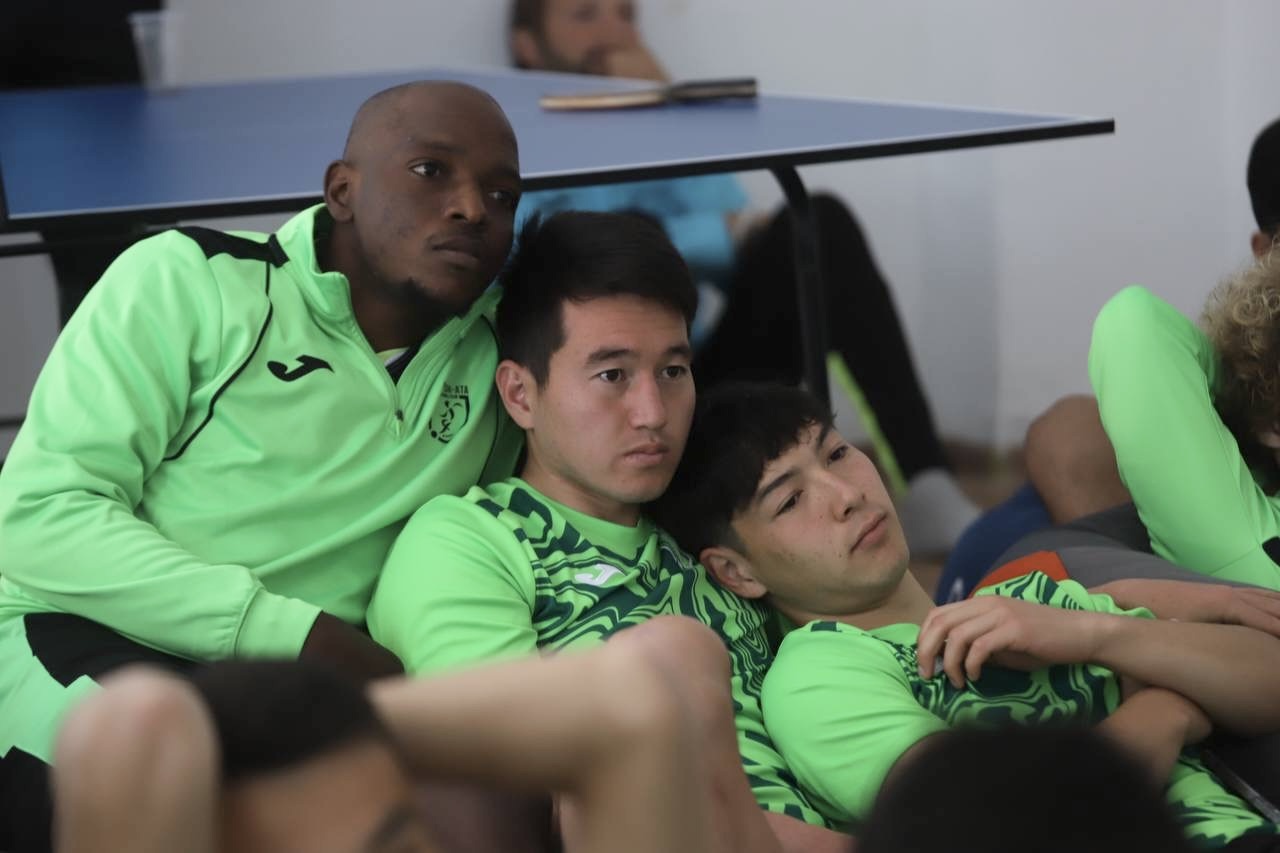
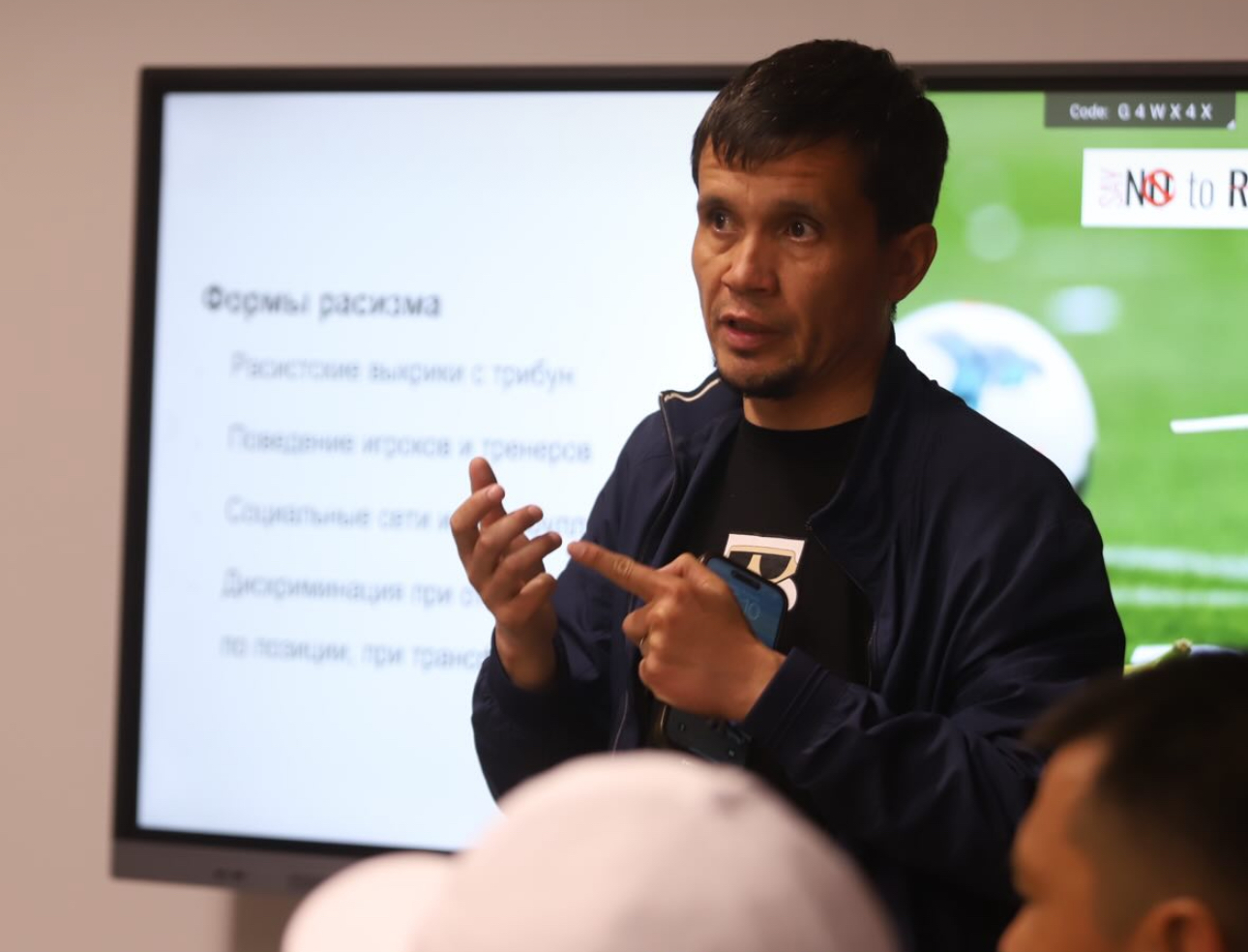
In April 2026, APFKR presented this project at the FIFPRO Asia/Oceania General Assembly in Sydney, where it was recognised as an example of practical union-led work in the region.
"We know this is not enough. Running seminars is a necessary first step — but the problem of discrimination demands sustained, systemic commitment. That means regular education at every level, clear club policies, transparent reporting mechanisms, and genuine consequences for perpetrators. Of particular importance is the role of clubs in working directly with their supporters — proactively, consistently, and not only after incidents occur. The stands cannot remain outside the sphere of accountability"
— Rustam Dzhanybaev, President of APFKR